Artists

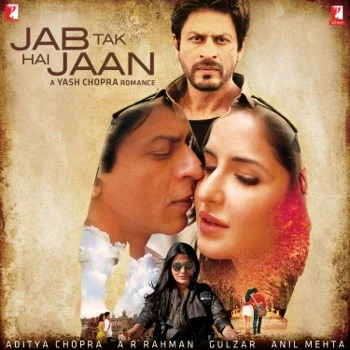
Featuring / On ScreenKatrina Kaif, Shah Rukh Khan

Heer Lyrics Meaning
Harshdeep Kaur’s “Heer” turns one of Punjab’s most familiar romantic archetypes into something quieter and more intimate. Written by Gulzar and composed by A.R. Rahman for Jab Tak Hai Jaan, the song draws on the language of Punjabi folk romance without treating it like a museum piece. Heer,…
Harshdeep Kaur’s “Heer” turns one of Punjab’s most familiar romantic archetypes into something quieter and more intimate. Written by Gulzar and composed by A.R. Rahman for Jab Tak Hai Jaan, the song draws on the language of Punjabi folk romance without treating it like a museum piece. Heer, Sahiban and Mirza appear not simply as legendary names, but as a way for the narrator to describe the kind of love she wants: close, devoted and brave enough to cross the distance between two people.
Kaur sings it with remarkable restraint, letting Gulzar’s images do most of the emotional work. A smile becomes a fresh morning, closed eyes become cool darkness, and love is imagined as walking beside someone without taking away their breathing space. Rahman keeps the arrangement spacious enough for those images to linger, giving “Heer” the feeling of an old Punjabi love story being remembered through a deeply personal voice. Released on the Jab Tak Hai Jaan soundtrack in 2012, the song remains one of the film’s most tender moments, carried as much by what it suggests as by what it says outright.
Chorus 1
Performed by Harshdeep Kaur"Heer-Heer" na aakho, adiyo
Don’t call me Heer, my friends
Main te Sahiban hoi
I have become Sahiban instead
Ghodi laike aave, lai jaaye
May he come riding in and take me away
Ghodi laike aave, lai jaaye
May he come riding in and take me away
Ho, mainu lai jaaye Mirza koi
Oh, may some Mirza come and take me away
Lai jaaye Mirza koi
May some Mirza take me away
Lai jaaye Mirza koi
May some Mirza take me away
"Heer-Heer" na aakho, adiyo
Don’t call me Heer, my friends
Main te Sahiban hoi
I have become Sahiban instead
Ghodi laike aave, lai jaaye
May he come riding in and take me away
Ghodi laike aave, lai jaaye
May he come riding in and take me away
Verse 1
Performed by Harshdeep KaurOhde jehi main te oh mere warga
I am like him, and he is just like me
Hassda ae sajjar saver warga
His smile is like a fresh new morning
Akkhan band kar laye te thande hanere warga
When he closes his eyes, he is like the cool darkness of night
Ohde jehi main te oh mere warga
I am like him, and he is just like me
Hassda ae sajjar saver warga
His smile is like a fresh new morning
Akkhan band kar laye te thande hanere warga
When he closes his eyes, he is like the cool darkness of night
Pre-Chorus 1
Performed by Harshdeep KaurOhde jehi main te oh Mirza mere warga
I am like him, and that Mirza is just like me
Ohde jehi main te oh Mirza mere warga
I am like him, and that Mirza is just like me
Chorus 2
Performed by Harshdeep KaurHo, "Heer-Heer" na aakho, adiyo
Oh, don’t call me Heer, my friends
Main te Sahiban hoi
I have become Sahiban instead
Ghodi laike aave, lai jaaye
May he come riding in and take me away
Ghodi laike aave, lai jaaye
May he come riding in and take me away
Ho, mainu lai jaaye Mirza koi
Oh, may some Mirza come and take me away
Lai jaaye Mirza koi
May some Mirza take me away
Lai jaaye Mirza koi
May some Mirza take me away
Verse 2
Performed by Harshdeep KaurNaal-naal turna te vitth rakhna
Walk beside me, but keep a little distance
Hadd rakh laina, vich dil rakhna
Keep within the boundaries, but keep love between us
Chhaavein-chhaavein bhaavein asi teri parchhaavein turna
Even in the shade, I’ll walk beside you like your shadow
Naal-naal turna, te vitth rakhna
Walk beside me, but keep a little distance
Hadd rakh laina, vich dil rakhna
Keep within the boundaries, but keep love between us
Chhaavein-chhaavein bhaavein asi teri parchhaavein turna
Even in the shade, I’ll walk beside you like your shadow
Pre-Chorus 2
Performed by Harshdeep KaurOhde jehi main te oh Mirza mere warga, haaye
I am like him, and that Mirza is just like me, oh
Ohde jehi main te oh Mirza mere warga
I am like him, and that Mirza is just like me
Chorus 3
Performed by Harshdeep KaurHo, "Heer-Heer" na aakho, adiyo
Oh, don’t call me Heer, my friends
Main te Sahiban hoi
I have become Sahiban instead
Ghodi laike aave, lai jaaye, haaye
May he come riding in and take me away, oh
Lai jaaye Mirza koi
May some Mirza take me away
Lai jaaye Mirza koi
May some Mirza take me away
Lai jaaye Mirza koi
May some Mirza take me away
"Heer-Heer" na aakho, adiyo
Don’t call me Heer, my friends
Main te Sahiban hoi
I have become Sahiban instead
Ghodi laike aave, lai jaaye
May he come riding in and take me away
Ghodi laike aaye, lai jaaye
May he come riding in and take me away
Chorus 1
Performed by Harshdeep KaurVerse 1
Performed by Harshdeep KaurPre-Chorus 1
Performed by Harshdeep KaurChorus 2
Performed by Harshdeep KaurVerse 2
Performed by Harshdeep KaurPre-Chorus 2
Performed by Harshdeep KaurChorus 3
Performed by Harshdeep KaurChorus 1
Performed by Harshdeep KaurVerse 1
Performed by Harshdeep KaurPre-Chorus 1
Performed by Harshdeep KaurChorus 2
Performed by Harshdeep KaurVerse 2
Performed by Harshdeep KaurPre-Chorus 2
Performed by Harshdeep KaurChorus 3
Performed by Harshdeep KaurLyric annotations
Word annotationAdiyo
English Meaning
“Adiyo” is a warm Punjabi way of addressing a girl or female friend. Here, because the singer is speaking to several women around her, it can naturally be understood as “my friends” or “O girls.”
Sources: Punjabi.com - Adiye
Word annotationSajjar saver
English Meaning
“Sajjar” means fresh, new or newly begun. So “sajjar saver” means more than simply “morning.” She compares his smile to a fresh new morning, something bright, new and full of life.
Sources: PunjabiPedia - Sajjar
Line annotation"Heer-Heer" na aakho, adiyo
Cultural context
Heer-Ranjha tells the story of Heer and Ranjha, two lovers whose relationship is opposed by Heer’s family. Heer is forced to marry another man, and the lovers go through separation and suffering before their story ends tragically in its best-known version. Waris Shah’s 18th-century verse telling of Heer-Ranjha became one of the most celebrated works of Punjabi literature.
Mirza-Sahiban is another tragic Punjabi love story, centred on Sahiban and her lover Mirza. Their families stand in the way of their love, and their attempt to be together eventually ends with both of them dying.
So when the singer says, “Don’t call me Heer, I have become Sahiban,” she is changing the legendary heroine with whom she identifies. She does not want to be imagined as Heer in this song; she sees herself as Sahiban, and the following lyrics begin placing her lover in the role of Mirza.
Sources: Ministry of External Affairs - Waris Shah and Heer-Ranjha, Panjab University - Punjabi love qissas and Mirza-Sahiban
Line annotationGhodi laike aave, lai jaaye
Cultural context
This line recalls one of the most famous parts of the Mirza-Sahiban story. Sahiban is being married to another man against her wishes. Mirza comes for her, and the two escape together on his mare, traditionally known as Bakki.
So the horse here is not simply a romantic image of a lover riding in. The singer is imagining Sahiban’s escape: she wants her lover to arrive on horseback and take her away in the same way Mirza came for Sahiban.
Sources: The Legends of the Panjab - Mirza, Sahiban and Bakki, Panjab University - Mirza and Sahiban’s escape
Line annotationNaal-naal turna te vitth rakhna
English Meaning
“Vitth” means distance or space between two people or things. Here, the line describes a healthy kind of closeness: walking beside someone, always being there for them, while still giving each other enough personal space.
The distance is not about separation or lack of love. It is about not letting love become suffocating or possessive. Two people can remain deeply connected while still giving each other room to breathe and be themselves.
Sources: PunjabiPedia - Vitth
Line annotationHadd rakh laina, vich dil rakhna
English Meaning
“Hadd” means a limit or boundary. This continues the thought of the previous line.
There may be a boundary between the two lovers, but the heart should remain within that shared space. In simple terms, she is saying that they can keep their limits while still keeping love between them.
Sources: PunjabiPedia - Hadd
Line annotationChhaavein-chhaavein bhaavein asi teri parchhaavein turna
English Meaning
The line plays with two related Punjabi images: “chhaan,” meaning shade, and “parchhaavan,” meaning shadow.
A shadow follows a person wherever they go and stays close to them. So when she says she will walk as his “parchhaavan,” she means that she wants to remain beside him like his shadow.
“Chhaan” can also carry the idea of shelter or protection. Together, the words create an image of staying close to the person she loves while also finding comfort and shelter in his presence.
Multi-line annotationਹੋ, ਮੈਨੂੰ ਲੈ ਜਾਏ ਮਿਰਜ਼ਾ ਕੋਈ … ਲੈ ਜਾਏ ਮਿਰਜ਼ਾ ਕੋਈ
Cultural context
“Mirza” is not being used here simply as a man’s name. It refers to Mirza, Sahiban’s lover in the famous Punjabi tragedy Mirza-Sahiban.
Mirza goes against Sahiban’s family and comes to take her away when she is being married to someone else. So when the singer wishes that “some Mirza” would take her away, she is wishing for a lover who will play that same role in her own life: someone who will come for her despite the obstacles standing between them.
FULL DETAILS