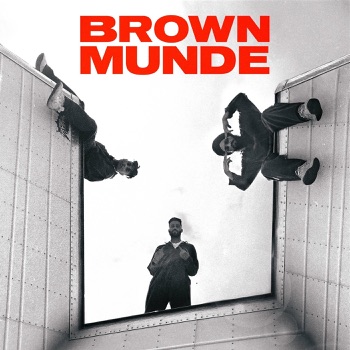

In “Brown Rang,” Yo Yo Honey Singh admires a woman’s complexion. In “Brown Munde,” AP Dhillon and his collaborators announce themselves. The titles are almost a matched pair: the same English adjective, followed by a Punjabi noun. Rang means colour or complexion; munde means boys or young men. But the small substitution changes who gets to speak. The woman in Singh’s song is being appraised. The men in Dhillon’s are doing the appraising, mostly of their own success.
Released nine years apart, in 2011 and 2020, the songs offer two uses of a word that English translation makes look deceptively simple. One makes brown skin desirable. The other makes “brown” a name to gather under. Their popularity in India invites a tempting story about a country learning to like its own complexion. It also invites a harder question: what, exactly, were listeners celebrating?
Singh’s explanation of “Brown Rang” was fairly straightforward. In a 2013 interview, he recalled the excitement a white woman could provoke and described his own preference for Indian beauty. The song puts that preference into the language of flirtation and competition. Brown skin wins his attention; white women lose it. His praise is exuberant, but it comes with a familiar condition. The woman’s value is still being decided by a man looking at her.
That limits the song’s usefulness as an anthem against colourism, without making its choice of adjective trivial. In a market where fairness had long been sold as an advantage, Singh gave listeners a hit with “brown” in the title. Google’s 2012 YouTube roundup for India placed its video first on the country’s top-trending list, ahead of “Gangnam Style.” A complexion that advertisements offered to improve had become something to sing about.
The prejudice those advertisements exploited was more complicated than a preference for Europeans. In Skin Colour Politics, Nina Kullrich traces the interaction of local beauty standards with colonial and global ideas of whiteness. Her account places skin colour among distinctions of caste, class, gender, region and religion. Fairness could confer status within India as well as evoke power from outside it. There was no single bias for a pop song to overturn.
The advantages attached to lighter skin were measurable. For a 2018 study of marriage preferences, psychologist Itisha Nagar presented 108 mothers with prospective matches for their children. After choosing a profile on the basis of education and work information, participants saw a photograph whose skin tone had been digitally altered. The lighter-skinned versions received stronger recommendations. The experiment was limited in scope, but its finding exposed a judgement that a declaration of affection in a song could hardly settle.
“Brown Rang” belongs inside that contradiction. Its compliment departs from the fairness ideal while preserving the habit of ranking women by appearance. A listener can enjoy the departure without mistaking it for emancipation. The song makes a different complexion fashionable; it leaves the authority of the person judging it largely intact.
By the time “Brown Munde” arrived, “brown” had another life in Canada. To understand it, we have to go back before either song. In spring 2006, geographer Heather Frost interviewed fifteen young men of Punjabi descent at a secondary school in Surrey, British Columbia. Her study, published in 2010, examined how they used “brown” to describe themselves. For these teenagers, the word carried ideas about belonging and masculinity, shaped partly by white peers, their fathers and stereotypes of Indo-Canadian men.
Frost’s subjects were a small group, not representatives of every South Asian in Canada. Even so, the dates complicate any account in which Singh’s song sends “brown” abroad to acquire a new meaning. That identity was already being negotiated in a Canadian school before “Brown Rang” appeared. The songs illuminate different histories of the word. They do not establish a line of descent between them.
Migration helps explain why the distinction matters. A Punjabi person may introduce themselves through language, religion, nationality or the place their family comes from. In a society where South Asians are a racial minority, “brown” can become another useful description, sometimes chosen and sometimes imposed. It allows people with different backgrounds to recognise a shared position. It can also obscure the differences that remain important to them. A word broad enough to bring people together will rarely describe each of them precisely.
Dhillon moved from Punjab to Canada in 2015. In a 2023 interview with PTI, he spoke about working at petrol stations and convenience stores, and about the pressure to earn money while studying. Music had to compete with the demands of getting by. That history gives some substance to the success he and Gurinder Gill, Shinda Kahlon and producer Gminxr proclaim in “Brown Munde.” The confidence is extravagant, but the work behind it is recognisable.
The lyrics move easily between Punjabi self-description and the vocabulary of international celebrity. Hollywood and Bollywood appear alongside expensive cars and clothes; desi songs meet a trap beat. There is little anxiety about whether these things belong together. The performers claim the combination as their own. Their Punjabi identity supplies the voice in which they describe a life that can no longer be contained within Punjab.
“Brown” fits that ambition. Coupled with munde, it retains the familiarity of Punjabi speech while reaching for a larger audience. The title names a group whose success listeners can share in, even if the cars and designer clothes remain out of reach. Its appeal rests partly on that ordinary pop bargain: someone else’s exceptional life becomes, for the length of a song, evidence of your own possibilities.
Dhillon later made the collective meaning explicit. Speaking to PTI, he described recognition for a “brown community” and connected it to music made by Indians in Canada and the United States. This was his account of the music’s significance, not proof that every listener understood it the same way. Still, it confirms that “brown,” for him, could name people and their prospects rather than merely the shade of their skin.
The song’s audience in India made the question more interesting. “Brown Munde” headed Apple Music’s list of its most-played songs in India for 2021. A phrase with an established use among a racial minority abroad was now being sung in a country where its social setting was different. Punjabi music had brought that language to a vast audience without requiring listeners to share the circumstances that had helped give it meaning.
It would take more than a streaming chart to establish what those listeners heard. Some may have recognised solidarity across borders. Others may have liked the beat, the swagger or the promise of a Punjabi success story with international reach. The song can accommodate those responses at once. A chorus travels more easily than the history of the words inside it.
There was a suggestive coincidence in the year of its release. In June 2020, Hindustan Unilever announced that it would remove “Fair” from Fair & Lovely; the brand became Glow & Lovely. For decades, the old name had made a beauty judgement seem as simple as an adjective. Now the company was retreating from that language, and later that year Punjabi musicians in Canada released a song that would make “brown” a hugely popular declaration in India.
The coincidence does not supply a cause, or a happy ending. A renamed cream and a successful single tell us about changes in public language. They do not show how a family chooses a daughter-in-law, how a darker-skinned woman is treated, or whether the old hierarchy has lost its force. The enthusiasm for “brown boys” might coexist quite comfortably with prejudices against brown girls. Singh’s song and Dhillon’s both require us to ask who is being celebrated, and on whose terms.
Translating lyrics has made me cautious about words that seem to need no explanation. “Brown” is already English. A translator could leave it untouched in both titles and have made no obvious mistake. Yet the reader would miss the difference between a compliment addressed to a woman and a claim voiced by a group of men. The dictionary can translate rang and munde. It takes the songs, and the people using the word, to explain what happened to brown.
Listen with context