

Of all the things you might do when you miss someone, kissing a road they’ve walked on is probably not the first that comes to mind. You might revisit a café where you once met, hold on to an old conversation or find yourself taking a particular route home for no good reason. In Alfaaz, Hamza Malik and Zain Zohaib take this sentiment a little further. The singer is so hopelessly in love that he wants to kiss the very paths his beloved has passed through, even if they walked there only once. It’s a rather extravagant thing to say, although anyone who has ever been embarrassingly fond of someone might understand where he’s coming from.
Released in July 2026, Alfaaz brings together the Pakistani artists in a love song written by Malik and Zahid Bashir. Its title, meaning “words”, is somewhat ironic considering how frequently the singer struggles to find them. He admits that he has changed without realising it, having fallen for someone despite previously being afraid of getting attached. Now he can barely think of anything else. He wants to know how this person is doing, whether anybody has seen them lately and, rather sweetly, asks that they not forget him.
The Urdu chorus finds him at a loss for words to describe the person he adores. Whatever belongs to him might as well belong to them, and nobody else comes close to being as special. There is a certain formality in the way he speaks about his beloved, with respectful expressions that make the admiration sound almost reverential. Then the Punjabi verses arrive, and the conversation becomes much more intimate.
Here, the singer has a fairly modest request. He wants the person he loves to sit in front of him for a while. Preferably, long enough for him to spend the entire night looking at them until the morning sun comes up. There are no plans to make, no grand adventures to go on. He would be perfectly content just having them around. It’s the sort of thing that sounds terribly unproductive until you’re in love, when spending six hours doing absolutely nothing with one particular person can somehow feel like an excellent use of time.
“Stay seated before my eyes for a long while.” The singer wishes to spend the entire night looking at someone he loves, right up until daybreak. There’s something charming about the simplicity of it all: he doesn’t need anything to happen. He just wants more time with them.
He goes on to imagine picking roses from a garden for his beloved, addressing them affectionately as aap janaab. The expression, which combines respectful forms of address, sounds endearingly formal in the middle of such an intimate confession. There’s something almost playful about treating the person you’re madly in love with like an honoured guest. Perhaps it’s his way of teasing them, or perhaps he’s so taken with them that even an ordinary greeting has to become an occasion.

Naturally, the compliments don’t stop there. He declares that his beloved is more beautiful than the stars and that nobody else in the world could possibly compare. It’s familiar territory for Punjabi love songs, where celestial bodies have long served as convenient reference points for someone’s beauty. But there’s a sincerity to the repetition. He keeps returning to the same thought, as though saying it once couldn’t possibly do it justice.
The verse becomes more affecting when he considers how much love he has already given this person. In one particularly tender admission, he says that whatever he knew about loving someone, he has given all of it to them. It’s a slightly different sentiment from the usual promises of loving somebody forever. He’s not claiming to possess some extraordinary understanding of romance. He’s simply saying that he has loved this person as well as he knows how.
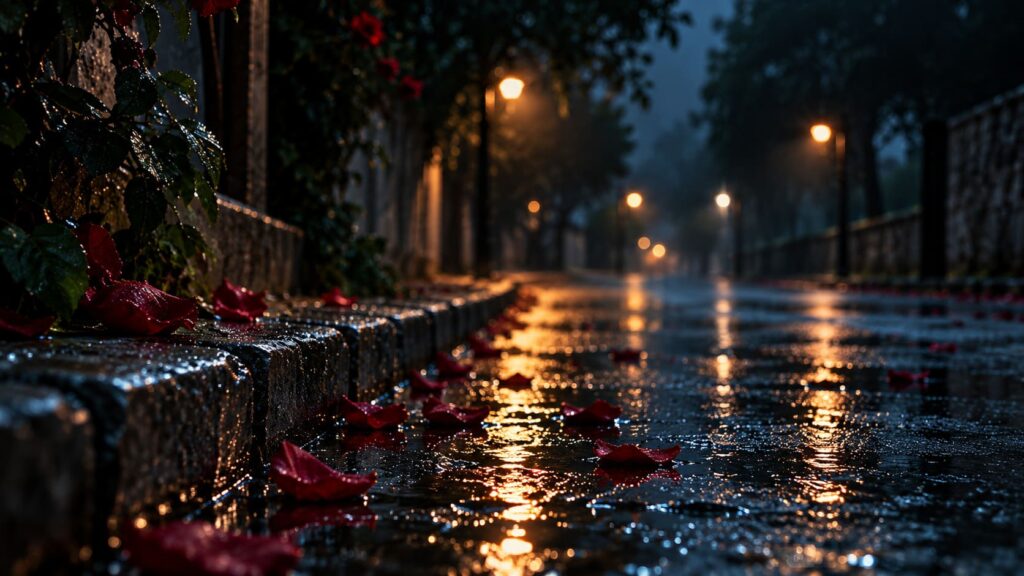
And then comes that business with the roads. The singer would happily kiss the paths his beloved has walked upon, however briefly. Taken at face value, it’s an absurd gesture. But people in love have always had a peculiar relationship with ordinary places. A street that meant nothing to you a month ago suddenly becomes memorable because someone once waited for you there. Even the most unremarkable surroundings can acquire a strange importance when they’re associated with a person you can’t stop thinking about.
The image also carries a sense of reverence familiar to South Asian romantic poetry, where love is often expressed through gestures of devotion that would seem excessive in everyday conversation. The beloved’s presence makes even the ground beneath their feet worthy of affection. The singer isn’t actually asking for anything in return here. He’s describing how completely his feelings have changed the way he sees the world around him.
By the end of the Punjabi verse, he has narrowed his romantic prospects down to exactly two possibilities: either he ends up with this person, or he would rather have nobody at all. It’s the kind of sweeping declaration that sounds perfectly reasonable when you’re infatuated and considerably less sensible when you’re discussing it with your friends. Still, the confidence doesn’t last entirely. Almost immediately, he asks the beloved to hear him out, a small plea that makes all the earlier declarations feel unexpectedly vulnerable.
There’s something interesting about how the song moves between its two languages. In the Urdu portions, the singer speaks admiringly about the person he loves. In Punjabi, he speaks directly to them, imagining their presence and telling them all the wonderfully unreasonable things he’d do. The distance between those two perspectives gives Alfaaz much of its emotional character. One moment, he’s wondering whether anybody has seen this person; the next, he’s picturing an entire night spent in their company.
For all its declarations about being unable to find the right words, Alfaaz is full of wonderfully specific ways of expressing affection. The roses, the stars, the long night spent looking at somebody and that poor, unsuspecting road all become part of the singer’s attempts to explain himself. Perhaps falling in love really does make people a little ridiculous. At least Alfaaz makes a convincing case that there’s something rather lovely about it.