

Shreya Ghoshal didn’t know she was recording her first Bollywood song when she stepped into the studio for Devdas. She thought she was there to rehearse. Sanjay Leela Bhansali had asked her to put on the headphones and run through “Bairi Piya”, supposedly to help her get comfortable with the arrangement. She closed her eyes, sang the song, and only discovered afterwards that the performance had been recorded. What she thought was practice would become her introduction to Hindi cinema.
More than two decades later, when Billboard India asked Ghoshal to curate a greatest-hits playlist for someone discovering her music, she returned to where it all began.
The question came towards the end of the singer’s appearance on 50 Notes, an interview that wandered through her relationship with music, her work across languages and her interest in supporting emerging artists. For someone with a catalogue as extensive as hers, selecting just a handful of songs seems rather unfair. You could probably put together an entirely different Shreya Ghoshal playlist for every mood and still have several favourites left over.
But her choices were revealing. Alongside “Bairi Piya”, she named “Sunn Raha Hai” from Aashiqui 2 and “Deewani Mastani” from Bajirao Mastani. Then, when asked to include songs outside Hindi cinema, she turned to the Bengali “Pherari Mon”, the Malayalam “Kizhakku Pookkum” and the Kannada “Araluthiru”.

Hear Shreya Ghoshal choose six songs from her own discography, moving from her familiar Hindi hits to favourites in Bengali, Malayalam and Kannada.
It’s tempting to treat the first three as the obvious choices and the latter three as recommendations for the more devoted listener. But that would miss what makes this particular selection interesting.
“Bairi Piya” is a good place to begin, and not only because it was her first Hindi-film recording. The song, composed by Ismail Darbar and written by Nusrat Badr, belongs to the early romance between Paro and Devdas, played by Aishwarya Rai and Shah Rukh Khan. It is playful, almost teasing, with Udit Narayan and Ghoshal trading lines as though they are having a conversation neither wants to end.
There’s something disarmingly young about her performance. Even now, knowing how much she has sung since, it is difficult to separate that voice from the character on screen. In a 2002 interview with Rediff, Ghoshal remembered the excitement outside the recording booth after she finished singing. She was still a teenager, unaware of just how much that afternoon would change her life.
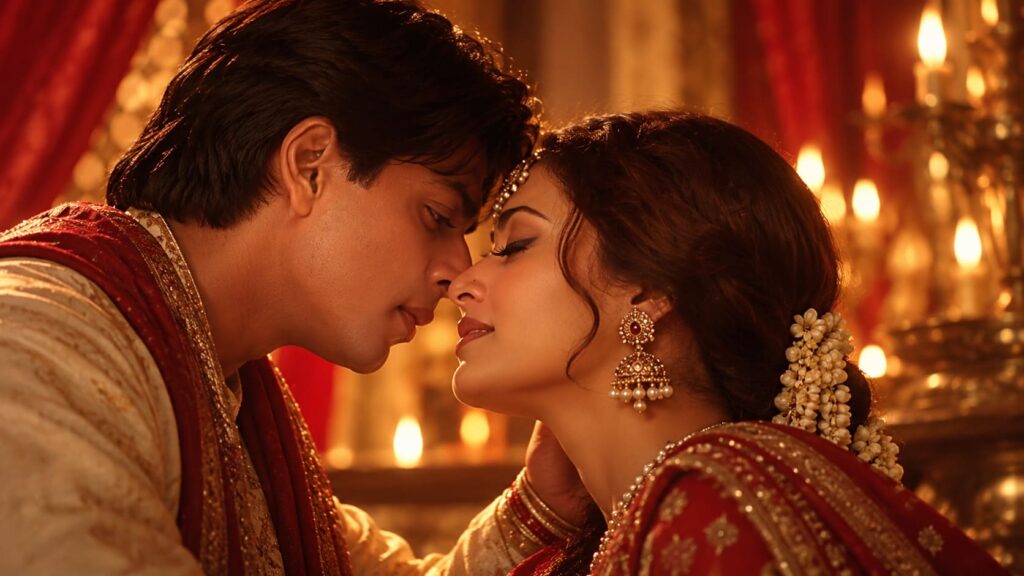
Perhaps that’s what makes the song so memorable. Long before the heartbreak catches up with Paro and Devdas, Ghoshal gives us the sound of someone falling in love and trying not to make it too obvious.
By the time “Sunn Raha Hai” arrived in 2013, the circumstances were rather different. In Aashiqui 2, Shraddha Kapoor’s Aarohi is an aspiring singer trying to find her own place in music while navigating a relationship that is slowly coming apart. The song, composed by Ankit Tiwari with lyrics by Sandeep Nath, exists in both male and female versions. Ghoshal sings the latter.
It’s the kind of song that becomes more painful when you pay attention to what is being asked. At its centre is a simple question: are you listening? Yet there’s no certainty that the person being addressed can hear, or even wants to.
Where “Bairi Piya” flirts with the possibility of love, “Sunn Raha Hai” sounds like someone desperately trying to hold on to it. The female version gives Aarohi’s longing a voice of its own, and Ghoshal doesn’t need to make every line sound enormous for the emotion to register. Sometimes the appeal itself is enough.
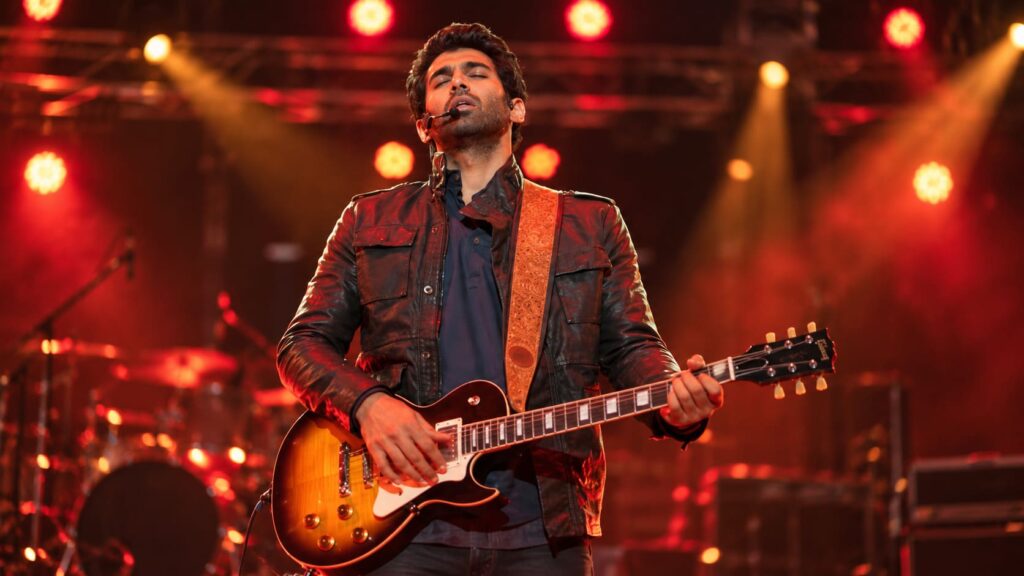
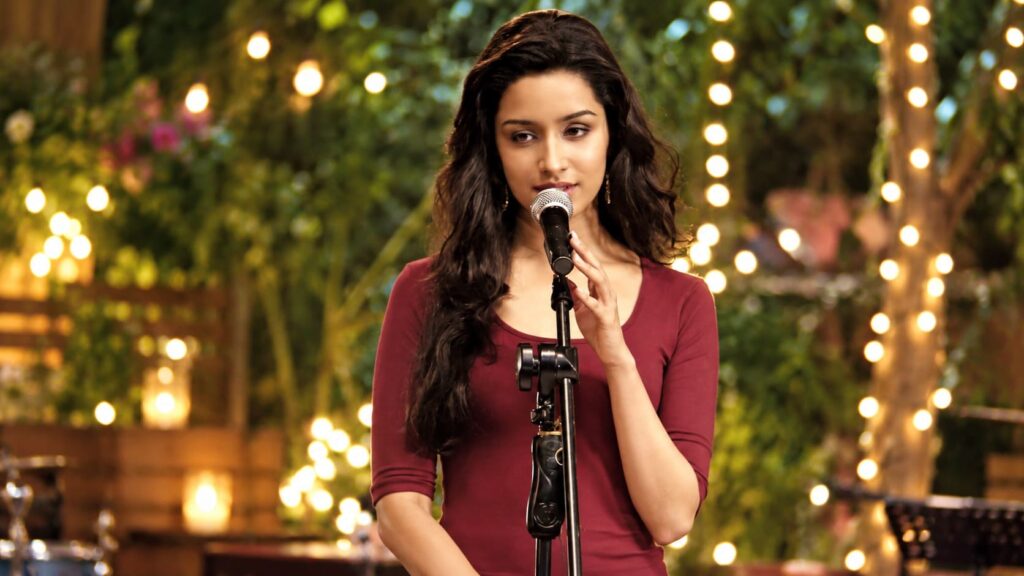
There’s a cruel irony in a love story about two singers: both know how to make themselves heard by the world, but neither can quite get through to the other.
Then comes “Deewani Mastani”, which takes us back into Bhansali’s world, although there is very little of Paro’s coyness left here.
Released in 2015, the song places Deepika Padukone’s Mastani in an elaborately staged declaration of love. Everyone is watching her, including Bajirao and Kashibai, but she seems concerned with only one person in the room. The entire spectacle is built around a woman making her feelings impossible to ignore.
Bhansali composed the song himself, with lyrics contributed by Siddharth-Garima, Ganesh Chandanshive and Nasir Faraaz. Ghoshal’s voice carries the declaration through an arrangement that brings together Marathi musical elements and qawwali influences. It won her the Filmfare Award for Best Female Playback Singer in 2016.
Placed beside “Bairi Piya”, it makes for a lovely contrast. Both songs belong to Bhansali’s extravagant romantic worlds, yet one is built around affection that can barely contain its playfulness, while the other makes love into a public declaration. Ghoshal sounds entirely at home in both.
Still, the second half of her playlist is where things become more interesting.
For listeners who know Ghoshal primarily through Bollywood, “Pherari Mon” might be the most rewarding discovery. The Bengali song comes from Aniruddha Roy Chowdhury’s Antaheen, a film concerned with loneliness, relationships and the strange ways people can feel close to one another without ever quite managing to connect.
Composed by Shantanu Moitra, with lyrics by Anindya Chatterjee and Chandril Bhattacharya, “Pherari Mon” is a duet with Babul Supriyo. Its title suggests a restless or fugitive heart, which feels particularly appropriate for a film full of people searching for something they cannot easily name.
The lyrics move through scattered images of familiar faces, passing days and a telephone that keeps intruding upon the heart’s private world. Nothing about it feels like a grand declaration. Its romanticism is quieter and slightly unsettled, as though the feeling might disappear if somebody tries too hard to explain it.
There’s a rather wonderful detail here. “Pherari Mon” was among the performances recognised when Ghoshal received the National Film Award for Best Female Playback Singer at the 56th National Film Awards. The song’s lyricists were honoured too. It isn’t merely an interesting detour into her Bengali discography; it belongs to some of her most acclaimed work.
“Kizhakku Pookkum”, from the 2010 Malayalam film Anwar, takes the playlist somewhere entirely different. Composed by Gopi Sundar and written by Rafeeq Ahamed, the song has an infectious sense of celebration. Its imagery is full of flowers, colour, romance and the excitement surrounding a bride, while the arrangement gives Ghoshal room to move between melodic sweetness and a lively, almost festive energy.
It’s also a reminder that singing in another language involves more than learning how to pronounce the words.
In a 2019 interview with The Times of India, Ghoshal spoke about the satisfaction she finds in working across India’s different musical traditions. She explained that composers and lyricists help her understand the nuances of languages she doesn’t speak, and that she would feel unhappy singing only in Hindi for too long.
That makes the presence of a Malayalam song on her introductory playlist especially fitting. For the Hindi-speaking listener, it may be unfamiliar territory. For Ghoshal, it is simply another part of the music she has spent her life making.
Her final selection, “Araluthiru”, from the Kannada film Mungaru Male (2006), is perhaps the one that deserves the longest pause.
Written by Jayanth Kaikini and composed by Mano Murthy, the song approaches affection without insisting that it must become romance. Its central image asks a beloved friend to continue blooming in the nourishment of friendship, rather than withering under the constraints of love. It is a tender thought, particularly in a film industry where relationships so often seem destined to end either in marriage or heartbreak.
The song allows for something less easily classified: a bond that can be deeply meaningful without needing another name.
Ghoshal has spoken fondly of it before. In a 2018 interview with Cinema Express, she described “Aralutiru Jeevada Geleya” as an iconic recording that had become a special part of her life. Its appearance here, eight years later, suggests that the affection has endured.
There’s something quietly satisfying about ending a playlist this way. Not with the biggest orchestral arrangement or the most dramatic high note, but with a song that asks us to reconsider the way we understand love.
Of course, six songs can hardly account for a career like Ghoshal’s. “Barso Re”, “Teri Ore”, “Saans” and countless other favourites could make equally persuasive cases for inclusion. Any listener who grew up with her music will probably disagree with at least one omission. That’s part of the fun of asking an artist to make a list like this.
What makes these selections worthwhile isn’t that they settle the question of her greatest songs. It’s that they offer a way into a discography many of us have encountered only in fragments. We know the Bollywood romances, the wedding favourites and the heartbreak anthems. We may be less familiar with the Bengali melodies, the Malayalam celebrations and the Kannada songs that have meant just as much to the people who grew up listening to them.
Ghoshal has spent much of her career singing for women whose stories were written by somebody else. Asked to introduce her own body of work, she didn’t confine herself to the songs that made her a household name in Hindi cinema.
She made room for the others, too.