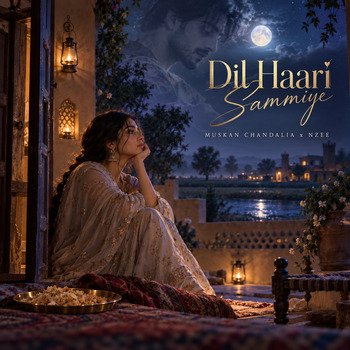
Dil Haari Sammiye

Rata Lambiya Kaliya Ni Samiye Song Lyrics
Dil Haari Sammiye by Muskan Chandalia and NZEE brings Punjabi folk emotion into a Malayalam pop setting, moving between two languages without losing the feeling at the heart of the song. Released on September 5, 2026, it opens with the familiar Rata Lambiya Kaliya Ni Samiye Song Lyrics,…
Dil Haari Sammiye by Muskan Chandalia and NZEE brings Punjabi folk emotion into a Malayalam pop setting, moving between two languages without losing the feeling at the heart of the song. Released on September 5, 2026, it opens with the familiar Rata Lambiya Kaliya Ni Samiye Song Lyrics, where long, dark nights and passing youth become part of the ache of waiting for someone who is far away. Even the small image of preparing choori while the person meant to eat it is absent makes that separation feel personal rather than dramatic.
As the song shifts into Malayalam, the emotion becomes more intimate. The beloved is described as the very meaning of love, someone the singer thinks about day and night and through whom she begins to see herself differently. By the time she admits that she has completely melted into this person and asks not to be pushed away, Dil Haari Sammiye feels less like a simple love song and more like a conversation between longing, surrender and the fear of losing someone after giving them your whole heart.
Raataan lambiyan-kaaliyan, ni Sammiye
The nights are long and dark, O Sammi
Langh gaiyan umraan baaliyan, ni Sammiye
The tender years of youth have passed by, O Sammi
Sammi meri waar, main vaari
O my Sammi, I would give myself up for you
Main vaari aan, ni Sammiye
I am devoted to you, O Sammi
Pehli-pehli vaar dil haari
For the very first time, I have lost my heart
Dil haari aan, ni Sammiye
I have lost my heart, O Sammi
Akkhan kitthe jakkdiyan, Sammiye
These eyes can find no rest, Sammi
Booha bind-bind takkdiyan, Sammiye
They keep watching the doorway every moment, Sammi
Choori baithi choor ke, Sammiye
I sit here, having crumbled the choori, Sammi
Khaavan waala door ke, Sammiye
The one who is meant to eat it is far away, Sammi
Sammi meri waar, main vaari
O my Sammi, I would give myself up for you
Main vaari aan, ni Sammiye
I am devoted to you, O Sammi
Pehli-pehli vaar dil haari
For the very first time, I have lost my heart
Dil haari aan, ni Sammiye
I have lost my heart, O Sammi
Ente kannil neeyaanu premam sakhiye
In my eyes, you are love itself, my beloved
Raavum pakalum ninne orthirikkum veruthe
Day and night, I simply keep thinking of you
Nin manassil enikku sthaanam undo kaniye?
Is there a place for me in your heart, my dear?
Kannonnu adayum munpe vannalonnu mathiye
Before my eyes close, if you come to me just once, that alone will be enough
Ninnilaay njan enne kaanunnu
In you, I see myself
Enne kaanunnu njan nidhiye
I see myself, my treasure
Ninniloode njan enne kaanunnu
Through you, I see myself
Enne kaanunnu njan nidhiye
I see myself, my treasure
Ninnilaay njan alinju poyi azhake
I have melted into you, my beautiful one
Nee inn enne thatti maatidalle pathiye
Please don't gently push me away today
Pehli-pehli vaar dil haari
For the very first time, I have lost my heart
Dil haari aan, ni Sammiye
I have lost my heart, O Sammi
Ninniloode njan enne kaanunnu
Through you, I see myself
Enne kaanunnu njan nidhiye
I see myself, my treasure
Lyric explanations
Word meaningSammi meri waar
Cultural context
The traditional refrain is “Sammi meri van” (ਸੰਮੀ ਮੇਰੀ ਵਣ). Today, however, it is much more commonly sung, titled and written as “Sammi meri waar” (ਸੰਮੀ ਮੇਰੀ ਵਾਰ).
That difference matters because “Sammi meri waar” should not be translated as “Sammi, it’s my turn.” The older word in the refrain is van (ਵਣ), not vaar (ਵਾਰ) meaning a turn or an occasion.
Punjabi University’s dictionary preserves an old use of ਵਣ as a way of addressing a girl, similar to ਨੀ (ni), and remarkably gives “ਸੰਮੀ ਮੇਰੀ ਵਣ” itself as the example. Older descriptions of the Sammi folk dance also record “ਸੰਮੀ ਮੇਰੀ ਵਣ” as the regular refrain and explain that ਵਣ was used for a girl in the Jangli dialect.
As that older regional usage became less familiar, van was apparently re-heard and rewritten as the much more familiar Punjabi word vaar. Sammi songs were passed largely through singing and oral tradition, so an unfamiliar word could easily survive in sound while its spelling and understood meaning changed. Modern recordings then helped fix “Sammi Meri Waar” as the familiar form: Shafaullah Khan Rokhri's recordings use that title, and Coke Studio also released its 2015 version as “Sammi Meri Waar.”
The older folk material tells a different story. Punjabi University records the refrain as: ਸੰਮੀ ਮੇਰੀ ਵਣ, ਮੈਂ ਵਾਰੀ ਮੈਂ ਵਾਰੀ ਮੇਰੀ ਸੰਮੀਏ, and traditional verses repeatedly use both “ਸੰਮੀ ਮੇਰੀ ਵਣ” and “ਵਣ ਸੰਮੀਆਂ”. That repeated use makes little sense if ਵਣ is replaced with ਵਾਰ, but it makes perfect sense as an old form of address.
So the feeling of “Sammi meri van” is closer to “O my Sammi” or “my dear Sammi.” The “turn” meaning belongs to ਵਾਰ, as in “pehli-pehli vaar” (“for the very first time”), not to the original Sammi refrain.
Sources:
Punjabi University Punjabi Dictionary – ਵਣ
PunjabiPedia, Punjabi University – Sammi folk tradition
Punjab De Lok Nach – traditional Sammi refrain
Word meaningMain vaari
English Meaning
A deeply affectionate Punjabi expression used when someone is completely devoted to another person. It carries the feeling of being willing to give oneself up for someone out of love, similar to saying that you are wholly theirs.
Word meaningBind-bind
English Meaning
Bind-bind means moment after moment. The image is of someone repeatedly looking toward the doorway, expecting the person they are waiting for to appear at any time.
Word meaningChoori
English Meaning
A traditional Punjabi preparation made by crumbling roti and mixing it with ingredients such as ghee and sugar. In this context, it adds a homely and intimate image to the feeling of waiting for someone.
Word meaningVeruthe
English Meaning
Here it gives the sense of thinking about someone naturally and without even trying. The beloved remains on the singer’s mind throughout the day and night.
Word meaningNidhiye
English Meaning
An affectionate Malayalam term meaning treasure. It is used for someone considered extremely precious and dear.
Word meaningSammi
Cultural context
Sammi is a woman at the centre of an old Punjabi folk tradition built around love, waiting and separation. There is no single agreed story about who she was.
In one Punjabi telling, Sammi was simply a young woman whose beloved, called Dhol, had gone away. She would sing and dance while remembering him, and the Sammi folk dance is said to have grown from her longing.
Another legend makes her a princess of Marwar. Punjabi University names her as the daughter of King Sursen and Dhol as a prince of Narwar, while another version recorded by NCERT pairs Princess Sammi with Prince Suchkumar.
There is also an older connection with the Dhola-Maru romance. In this tradition, the Rajasthani heroine Maru or Marvani becomes Sammi in Punjab. She spends years separated from Dhola before they are reunited. On their journey back together, Maru is bitten by a snake and appears to die, before being brought back to life in one popular telling.
Because these stories passed orally from one region to another, their names and details changed. What remained was the image of Sammi as the woman waiting for someone she loves. That is why the old Sammi songs repeatedly return to distance, sleepless waiting and an absent beloved. The lines about watching the door, the long nights and preparing food for someone who is far away all belong naturally to that same world.
Sources:
PunjabiPedia, Punjabi University – Sammi
NCERT – Sammi folk tradition
Asian Ethnology – Dhola: A North Indian Folk Genre
Sahapedia – Dhola-Maru tradition
Line explanationPehli-pehli vaar dil haari
English Meaning
Losing one’s heart here means falling in love and no longer being able to resist those feelings. The emphasis on pehli-pehli vaar makes it the singer’s first experience of love this overwhelming.
Line explanationRaataan lambiyan-kaaliyan, ni Sammiye
English Meaning
The long, dark nights reflect more than the passing of time. They suggest loneliness and the feeling that nights seem endless when someone you love is away.
Line explanationLangh gaiyan umraan baaliyan, ni Sammiye
English Meaning
Umraan baaliyan refers to the tender or youthful years of life. The line carries a sense of youth slipping away while the person remains caught in longing and separation.
Line explanationEnte kannil neeyaanu premam sakhiye
English Meaning
The beloved is not simply someone the singer loves. They have become the singer’s very idea of what love itself looks and feels like.
FULL DETAILS
Song credits
| Performed by | Muskan Chandalia, NZEEEE |
|---|---|
| Written by | Gagandeep Singh, NZEEEE & Traditional |
| Music by | Perfecto |
| Genre | Indian Pop |
| Released | September 5, 2026 |